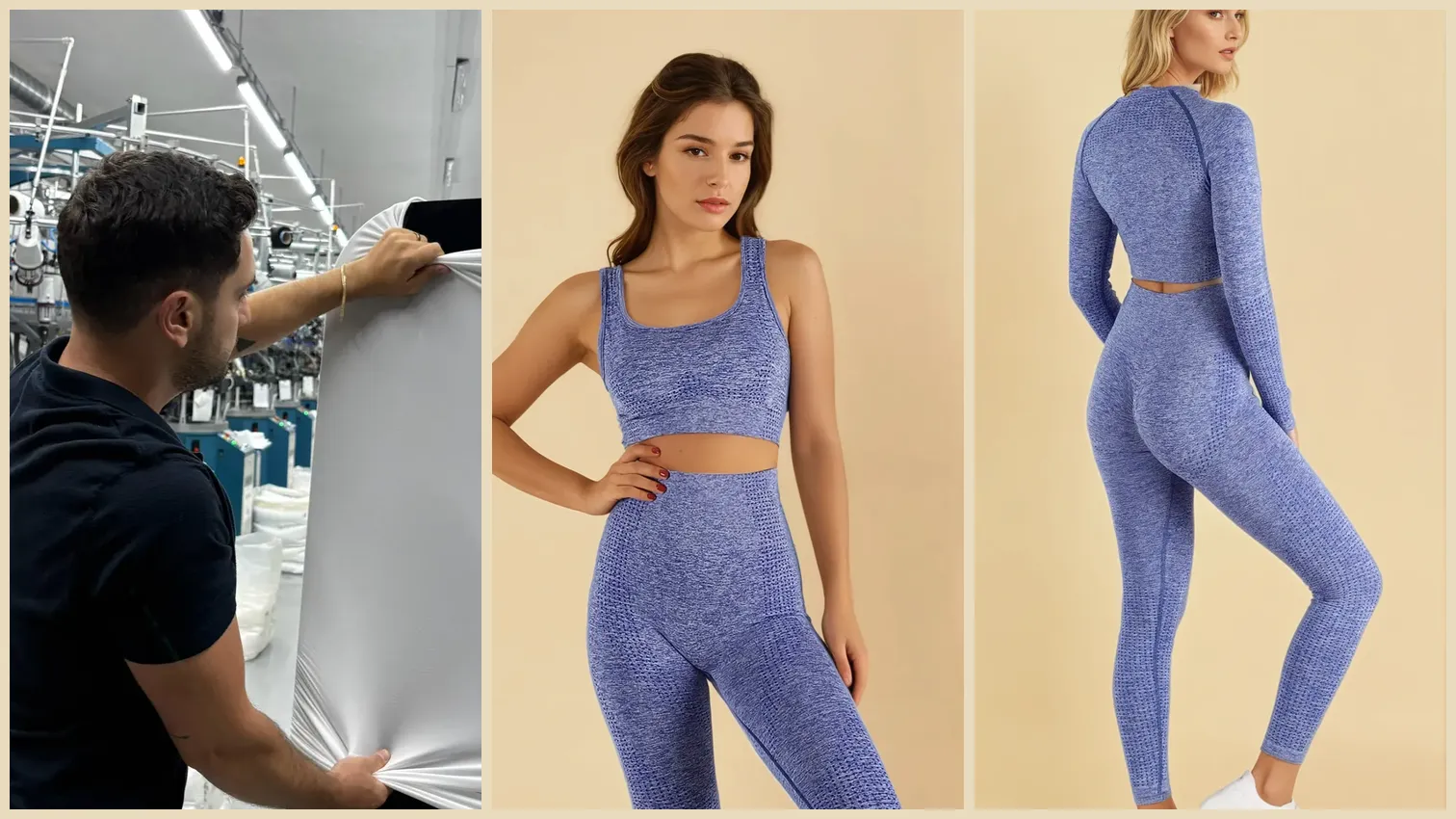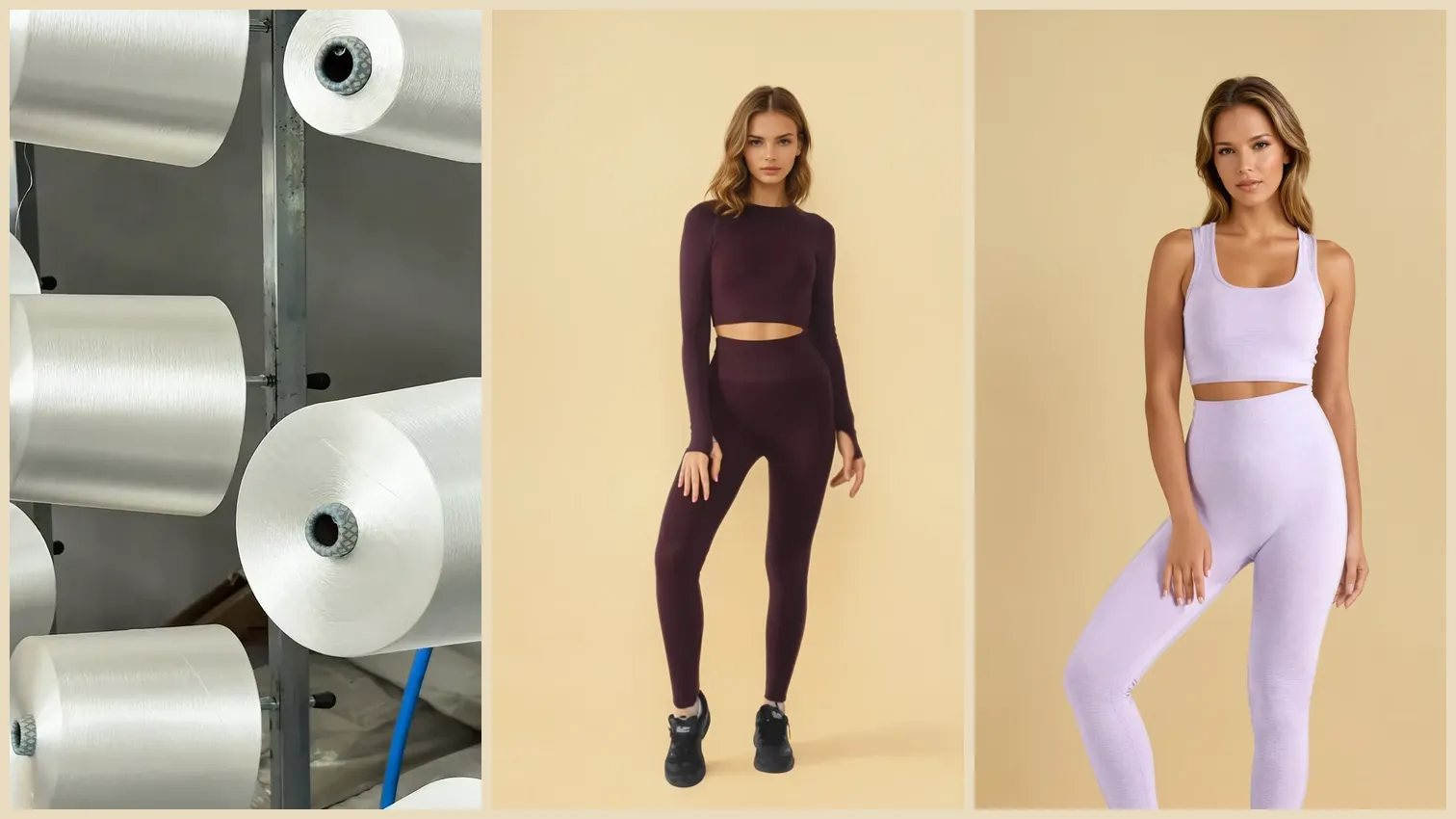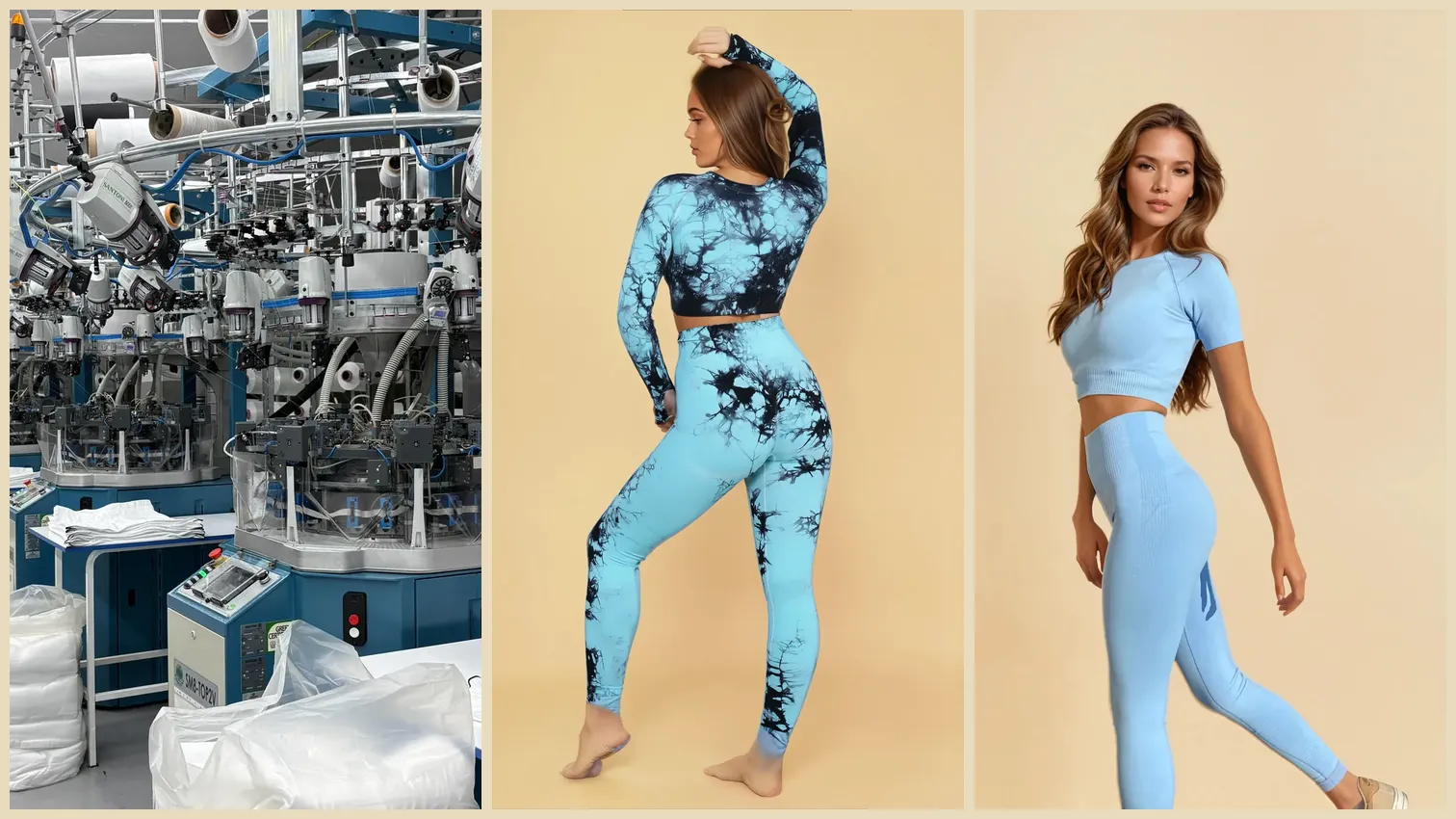
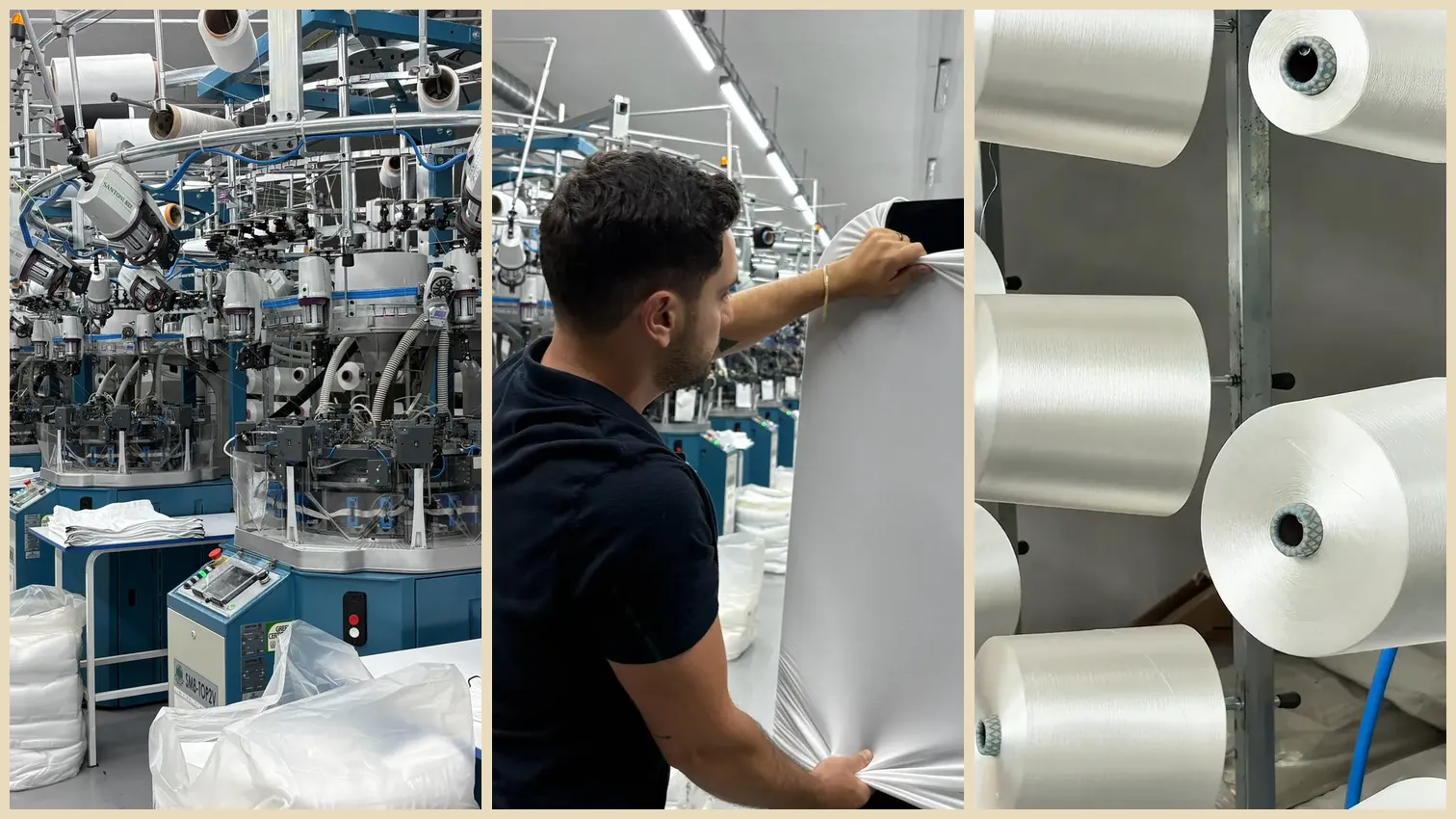
A manufacturer owns the machines and makes your design to order; a wholesaler sells garments that already exist; a trading company takes your order and places it with a factory it does not own. For a new activewear brand the difference shows up in price, in how much control you have over fit and fabric, and in whether your design ends up in someone else’s catalog. We are a manufacturer: we knit to order on our own Santoni seamless machines in Istanbul, from a minimum of 500 pieces per style, and a client’s design is never sold to or made for another brand. Here is how to tell which one you are talking to, how to check a factory, and exactly what to send to get a quote you can use.
1. The three, side by side
| Wholesaler | Trading company | Manufacturer | |
|---|---|---|---|
| What they sell | Garments already made and in stock | Access to factories they do not own | Production of your design |
| Is the design yours? | No, others sell the same piece | Depends on the factory behind them | Yes |
| Typical quantities | Small, often per box | Varies | Set by the factory’s minimum |
| Who controls quality | Nobody you can talk to | The trading company, at a distance | The factory, directly with you |
| Price | Highest per piece | Factory price plus a margin | Factory price |
| Best for | Testing demand fast | Buying across many unrelated categories | Building your own product |
None of the three is a scam. They are different businesses, and the problem only starts when one presents itself as another.
2. What a wholesaler looks like
A wholesaler buys or makes garments in volume and sells them from stock. Its catalog has fixed colors and sizes, prices per piece, and short dispatch times. Some offer white label or blanks: the same stock garment with your logo added.
This is a perfectly sensible way to test whether people will buy from your brand at all. It is not a way to build a product. You cannot change the fabric, the fit or the waistband, and the leggings you sell under your name may be on sale elsewhere under several other names.
Signs you are talking to a wholesaler: “in stock”, “ships this week”, a price list per piece, minimums counted in boxes, and an offer to add your logo to something that already exists.
3. What a trading company looks like
A trading company sits between you and one or more factories. It takes your order, places it with a factory, manages the job and adds its margin. Sourcing guides put that margin anywhere from about 10% to 40% on top of the factory price; treat that as a general market range.
Trading companies can be useful if you are buying many unrelated products and want one contact. For a focused activewear brand, the extra layer costs you money and distance: the person answering your questions has not seen the machine, and the factory behind the order can change between your first run and your reorder without you knowing.
Signs you are talking to a trading company:
- The catalog covers everything: jeans, swimwear, hoodies, seamless leggings, bags
- They say “our factory” but cannot name the machines or show the knitting floor live
- Technical questions take days and come back vague
- You only ever speak to sales, never to anyone in production
- Supplier platform labels say “manufacturer”; those labels are self-declared, so they prove nothing on their own
4. How to check that a factory is a factory
Five checks settle it for almost every supplier.
- Ask which machines they own. Seamless garments are knitted on circular seamless machines, such as Santoni’s. A real factory names the model without having to check.
- Ask for a live video call from the floor. Not photos, not a pre-recorded video. A walk past the running machines, today.
- Ask which steps happen under their own roof and which do not. A real factory answers precisely. Ours: knitting is in-house, on our Santoni seamless machines, and we take the product from yarn to finished, packed garment and deliver it.
- Ask whose certificates they are. A factory may hold its own certifications or provide its suppliers’. We hold none of our own, and can provide the certificates that cover our yarn and dyeing on request. What matters is that the answer is straight.
- Visit. Our clients can come to the Istanbul office at any stage, even to build the sample with us. A factory that keeps postponing a visit is telling you something.


If a supplier cannot show you the machine your garment will be knitted on, you are not talking to the factory.
5. Exactly what to send to get a usable quote
Most first enquiries get vague answers because the enquiry was vague. Send this and you will get a quote you can put into a budget:
- Product type and references. Front and back images of what you want, or a garment you already like the fit of.
- Fabric feel. Nylon/elastane or polyester/elastane, or a description: soft, compressive, matte, shiny.
- Quantity per style. With us the minimum is 500 per style.
- Colors per style. Up to 3 with us. Pantone references help.
- Size plan. We recommend double sizing, S/M and M/L.
- Logo. Method and placement, with the artwork as a vector file. We recommend knitted-in.
- Labels and packaging. Whether you want branded hang tags and polybags (a paid option).
- Destination. Which country the goods go to, and whether you have your own forwarder or want us to arrange shipping.
- Target date, and a target price if you have one.
You do not need a tech pack, the factory specification document, to start the conversation. A clear brief does more than a half-finished tech pack.
6. What a good quote reply looks like
A useful reply from any factory should tell you:
- Unit price per style, and what it includes
- The minimum, and what it is counted against
- The sample fee, and whether it is credited against bulk (ours is $150 per style, credited in full)
- Sample and bulk lead times
- Payment terms (ours: usually 40% when you move to bulk, 60% at delivery)
- What is not included, usually freight and import duties
If any of these are missing, ask. If they stay missing, that is your answer. The cost breakdown for a first order shows how to turn a reply like this into a budget, and if you are still weighing countries, see our Turkey vs China comparison.
We are a seamless manufacturer producing to order since 2019, not a wholesaler of stock. Read how we work as a private label activewear manufacturer, go back to the guide to starting an activewear brand for the bigger picture, or send us the list above and we will reply with a quote that answers every point in section 6.