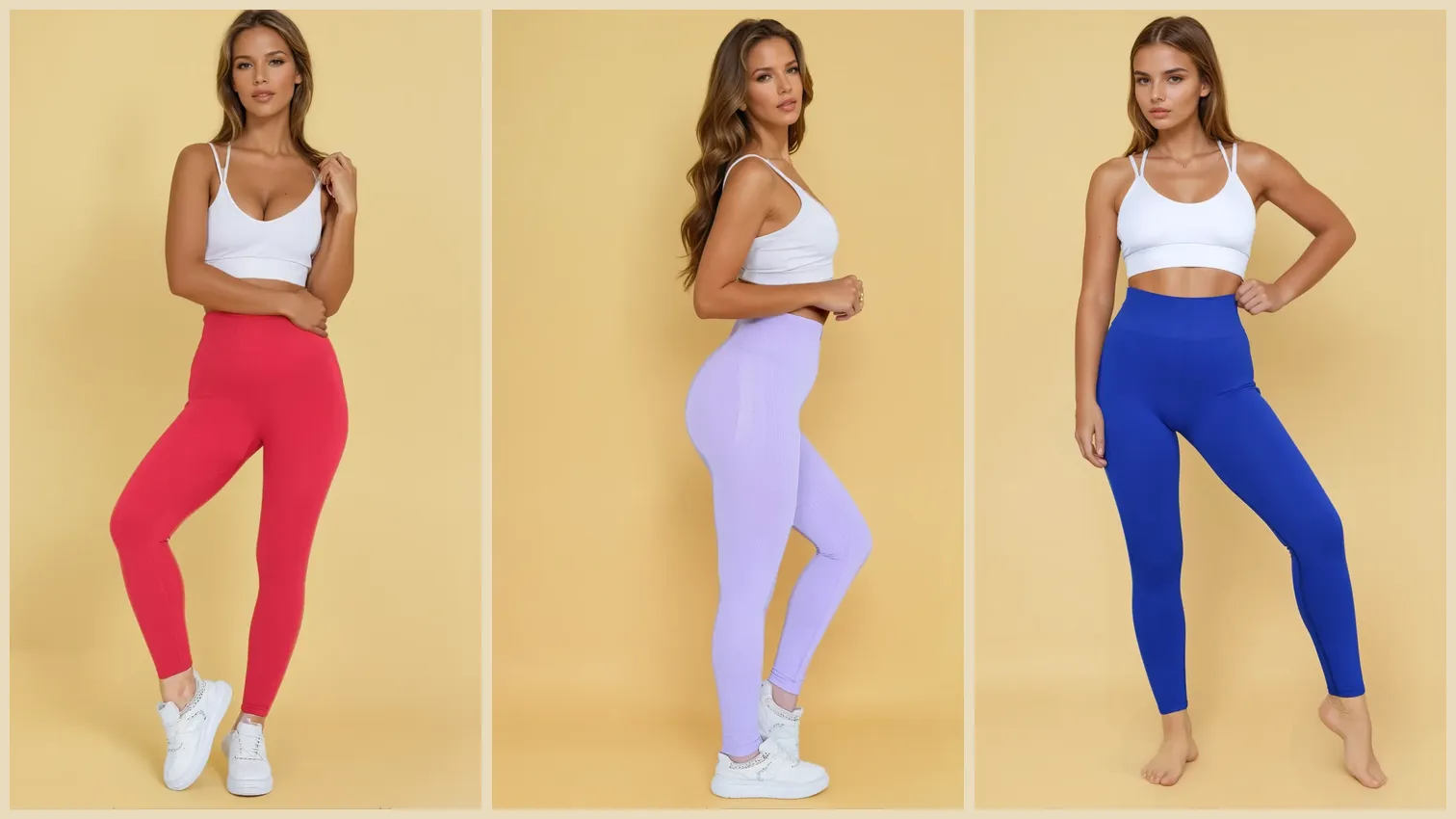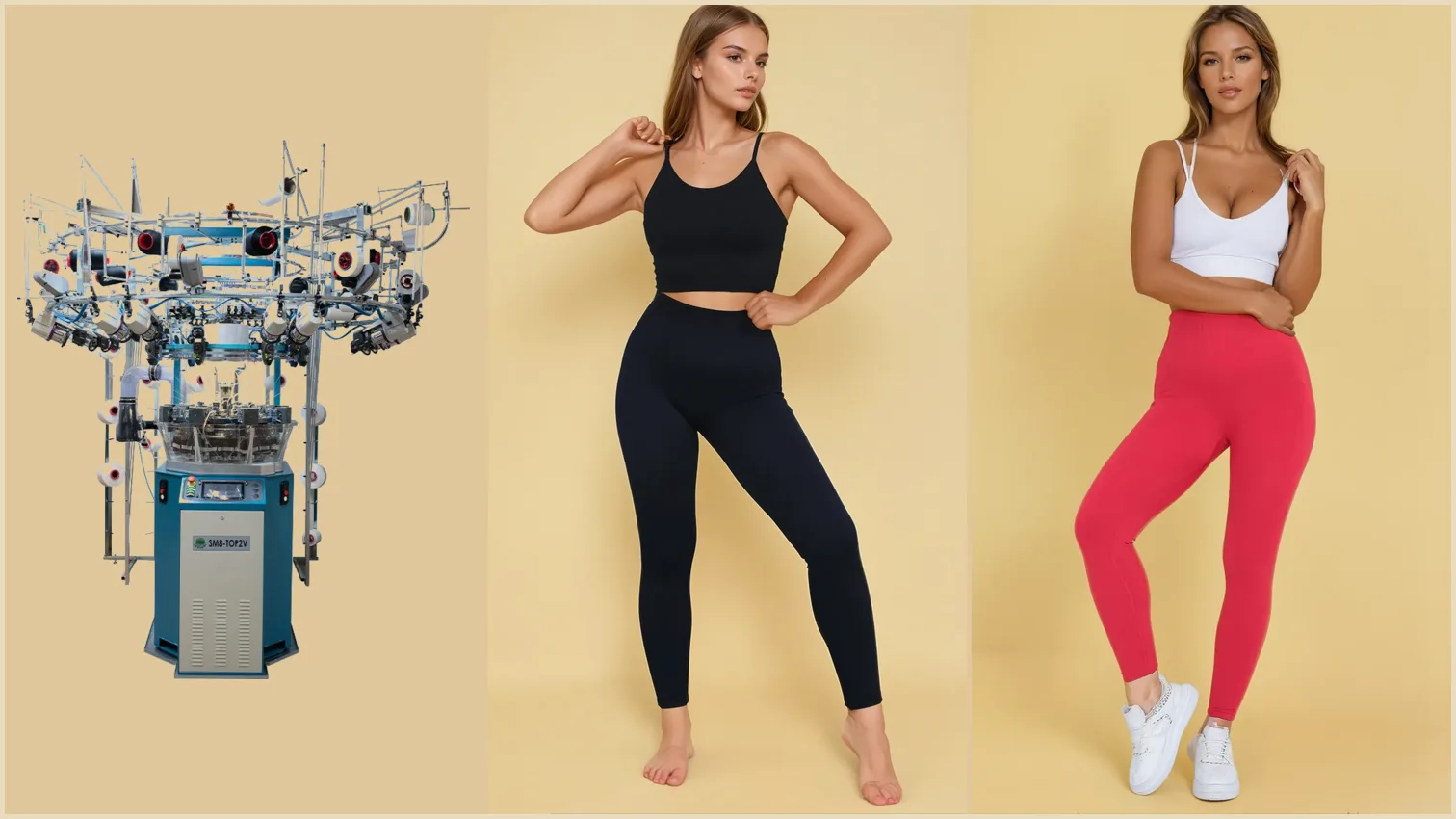
On seamless activewear we recommend a knitted-in logo: it is part of the fabric, so it lasts through washing as long as the garment does, and with us it costs nothing extra. Silicone and heat transfer logos are available on request, with heat transfer starting from about $0.50 per logo in standard sizes. For sizing, we recommend double sizing, S/M and M/L, because seamless fabric stretches enough that two sizes cover roughly 40 to 100 kg of body weight. Both decisions are best made before the fit sample, and this article covers what each option does and when to choose it.
1. Knitted-in logos
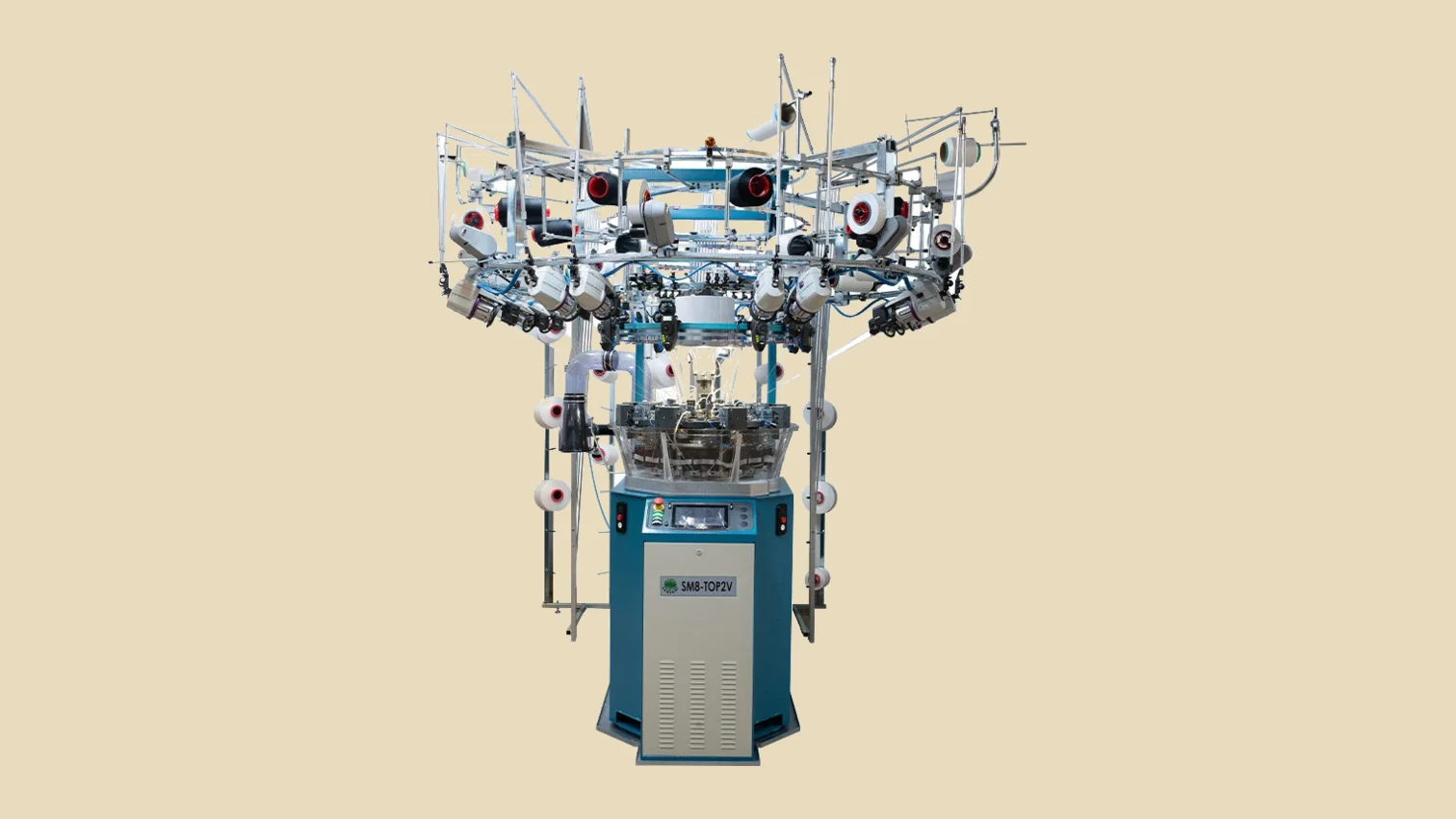
A knitted-in logo is created by the knitting machine itself. The logo is part of the knit program, formed by a change in stitch structure, so it is in the fabric rather than on it.
Because seamless garments are usually dyed after knitting, a knitted-in logo normally shows as a tonal mark: the same color as the garment, visible through texture. It is the subtle, premium look you see on many seamless brands.
Why we recommend it:
- Wash durability. There is nothing to crack, peel or fade off. The logo lasts as long as the fabric.
- Comfort. No extra layer sitting against the skin, nothing stiff on a stretch zone.
- Cost. With us it is included, with no extra charge.
The limits are real too. A logo built from stitches cannot carry fine lines, very small text or color gradients the way a print can, so very detailed artwork may need simplifying. And because it is part of the program, it has to be decided before the sample is knitted.
2. Silicone logos
A silicone logo is a raised, slightly rubbery print applied to the finished garment with heat. It can be any color, so it stands out against the fabric, and it stretches and recovers with the garment better than a flat print.
Silicone suits brands that want a visible, contrasting logo with a three-dimensional feel. It is available on request and quoted per design, since the price depends on the size of the logo and how it is made.
3. Heat transfer logos
A heat transfer is a printed film pressed onto the garment with heat. It can reproduce fine detail and full color, which makes it the most flexible option for complex artwork.
With us, heat transfer starts from about $0.50 per logo in standard sizes. On a 500-piece style, one placement starts from about $250.
The trade-off is durability. Any applied logo sits on top of a fabric that stretches, and on the zones that stretch hardest it is under more strain wash after wash than a logo that is part of the knit.
| Knitted-in | Silicone | Heat transfer | |
|---|---|---|---|
| How it is made | Part of the knit | Raised print applied with heat | Printed film pressed on with heat |
| Look | Tonal, textured | Raised, any color | Flat, full color, fine detail |
| Wash durability | Lasts as long as the garment | Good, applied layer | Applied layer, more strain on high-stretch zones |
| Detail | Simple shapes and bold text | Medium | High |
| Cost with us | No extra charge | Quoted per design | From about $0.50 per logo |
| Decide by | Before the sample | Before bulk | Before bulk |
Choose the logo method before the fit sample, not after. A knitted-in logo is part of the program, so the sample is where you see it for the first time and where changing it is cheapest.
4. Where to put the logo
The most common placements on seamless pieces:
- Leggings: center back waistband, front waistband, or the outer thigh
- Sports bras: center front under the band, or center back
- Tops and jackets: chest, back neck or sleeve
Keep the logo away from the places that stretch most when the body moves, such as the knee or the seat, if you are using an applied logo. A knitted-in logo is more forgiving here because it stretches as the fabric does.


5. Why double sizing works for seamless
A cut and sew legging takes its shape from pattern pieces, and a pattern fits a narrow range of bodies. That is why cut and sew brands often run five or six sizes.
A seamless garment is knitted as a tube with its shaping built into the knit, and the fabric stretches and recovers in every direction. One garment fits a wider range of bodies. Thanks to that stretch, two sizes cover roughly 40 to 100 kg of body weight, which is why we recommend double sizing, S/M and M/L, for most leggings, bras and sets.
For a new brand, two sizes have practical advantages:
- More pieces per size. Our minimum is 500 pieces per style. In two sizes, that is a deep run of each instead of a thin one of many.
- Fewer leftovers. The sizes at the far ends of a long run are the ones that end up discounted.
- Simpler for customers. Fewer options means fewer wrong choices and fewer returns for size.
- Less setup. In seamless, each size is set up and checked on its own.
6. When to add a third size, or a different run
Up to 3 sizes are possible per 500 pieces, and other size runs are available on request. A third size or a different split can make sense if:
- Your brand is built around a body range that the two standard sizes do not center on
- You make a high-compression product, where a tighter fit window matters more than stretch
- Your customers expect single sizes (S, M, L) because that is how your category is sold
The seamless MOQ explainer shows how sizes and colors fit inside a 500-piece order.
7. Turning two sizes into a size chart your customers trust
Double sizing only works if customers can see which size is theirs. Publish a size guide with measurement ranges for each size: height, weight, waist and hip.
The best source for those ranges is your own fit sample. Try it on several people across the range, at the light and heavy end of each size, and note where it fits well. Our guide to the sample process covers how to test a sample properly.
We knit seamless leggings, sports bras, sets, tops, bodysuits, jumpsuits and men’s T-shirts to order on our own Santoni machines in Istanbul. See how we approach fit as a seamless leggings manufacturer and yoga pants manufacturer, or start with the guide to starting an activewear brand. When you are ready, send us your logo and size plan and we will show you how they work on your style at the sample stage.