Seamless vs cut and sew is the first real manufacturing decision an activewear brand makes, and it usually gets made backwards. The factory is chosen first, and the construction method quietly follows from whatever machines that factory happens to own. The two methods build a garment in completely different ways, and the difference shows up in fit, in minimums, in what your designs are allowed to look like and in where the money goes. Here is the comparison as we see it from inside a seamless factory, including the cases where cut and sew is the better answer.
1. The difference is where the garment gets its shape
In cut and sew, fabric arrives as a roll. It is laid out, cut into pattern pieces, and those pieces are stitched together with flatlock or coverstitch seams. Waistbands, binding and trims are applied as separate operations. The shape of the garment lives in the pattern and in the seams that join it.
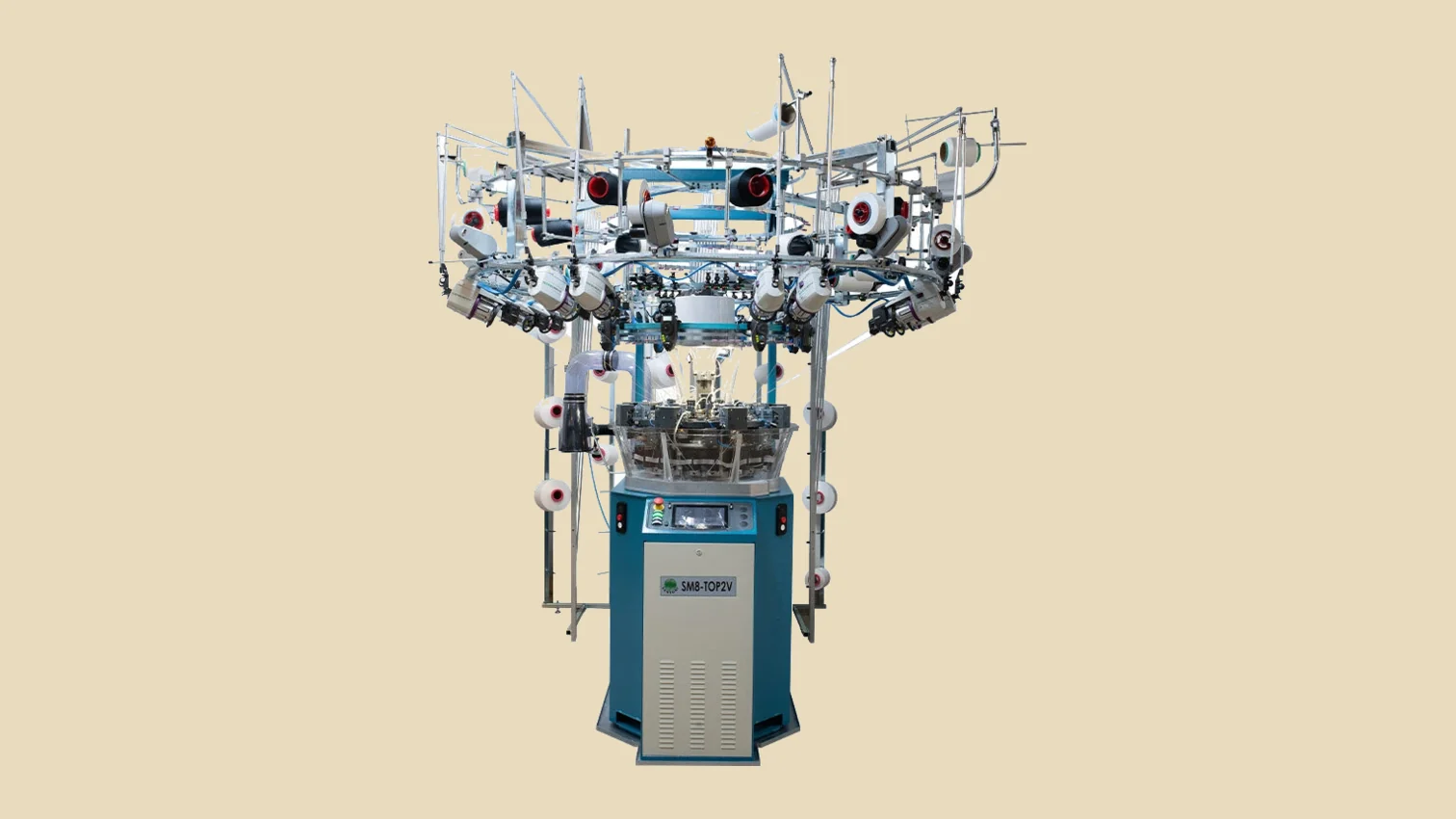
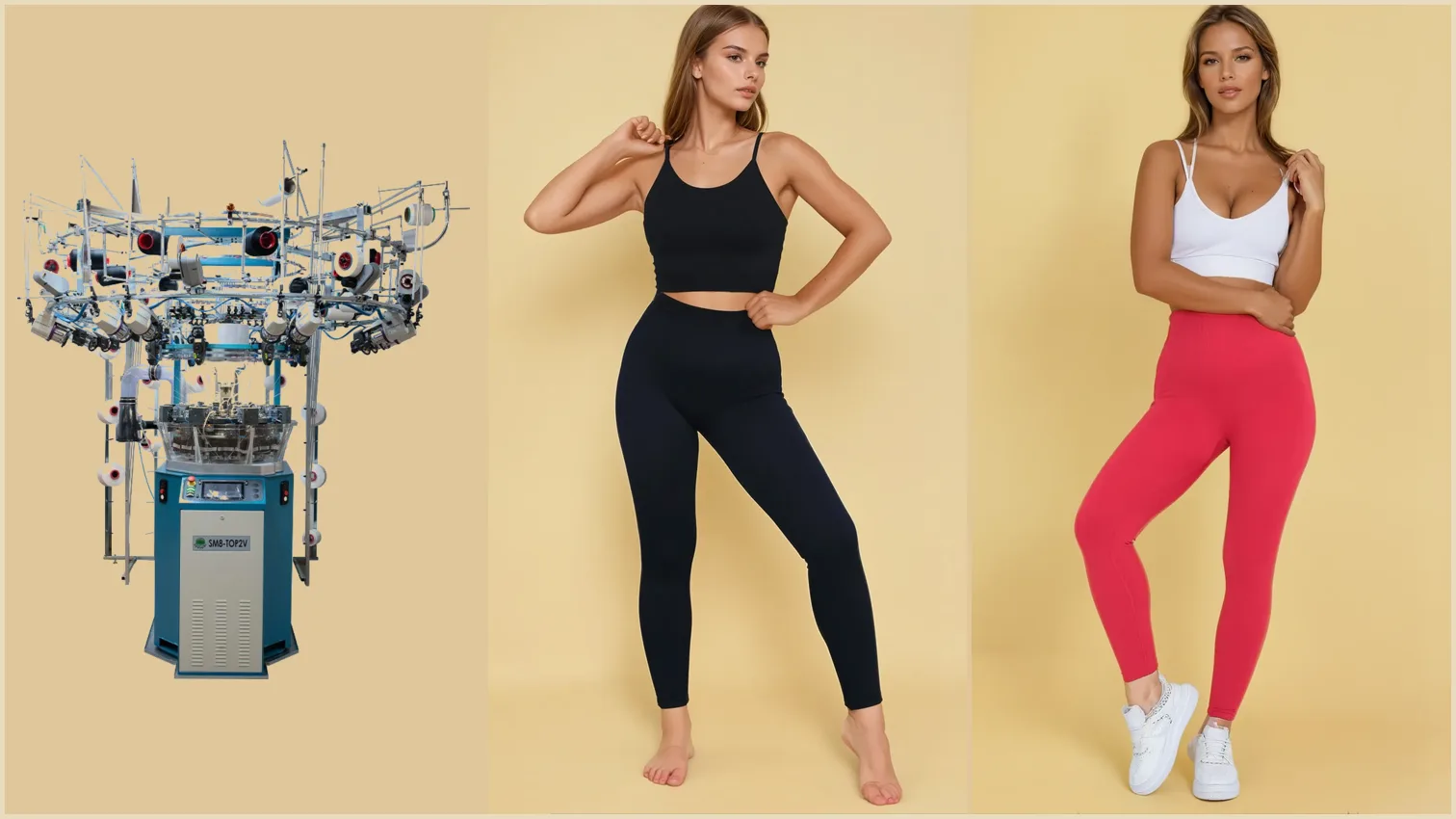
In seamless, there is no roll of fabric to cut. Yarn feeds directly into a circular knitting machine that builds the garment as a tube, and the shaping happens while it is being knitted. Stitch structure, density, yarn and elasticity change from one zone to the next, so the waistband, the support panels, the ribbing and the mesh ventilation are all knitted in as part of the same piece. What comes off the machine is already garment-shaped. Finishing closes it, dyes it and adds whatever trims the style calls for.
That single difference drives everything below it.
2. Side by side
| Seamless | Cut and sew | |
|---|---|---|
| Where shape comes from | The knitting program | The pattern and the seams |
| Seams | Few, often only a closing seam | Many, one per panel join |
| Zones and support | Knitted in as structure | Added as extra panels or elastics |
| Design freedom | Structure, texture, knitted-in color | Panel blocking, prints, hardware, woven parts |
| Materials | Knit yarn only | Knits, wovens, mesh, bonded fabrics, mixed |
| Waste | Very little, the garment is knitted to shape | Cutting scrap on every marker |
| Setup work | Programming and sampling per style | Patterns, grading and markers per size |
| Labor per unit | Low, most of the work is machine time | Higher, and it scales with seam count |
3. What seamless is genuinely better at
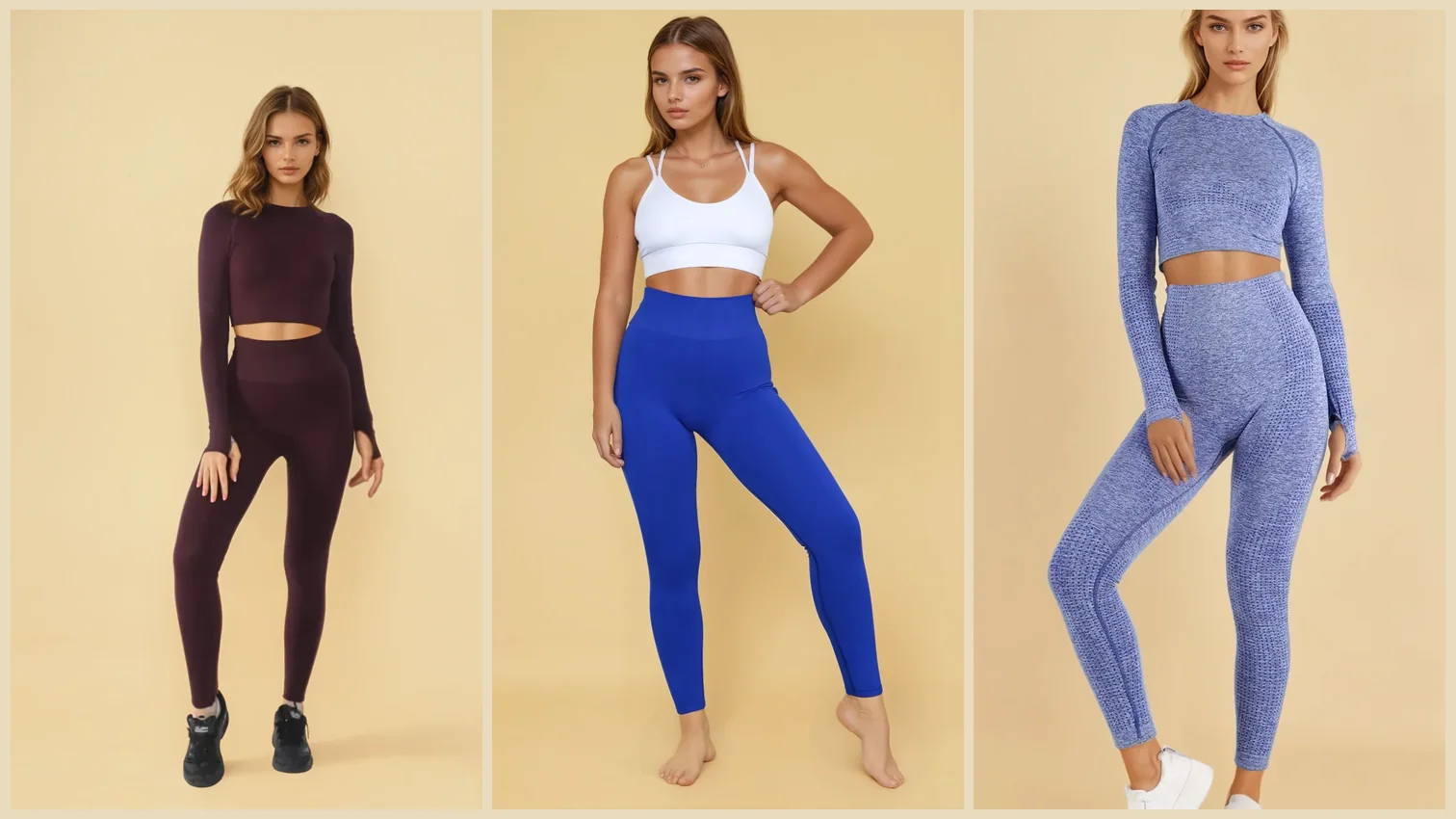
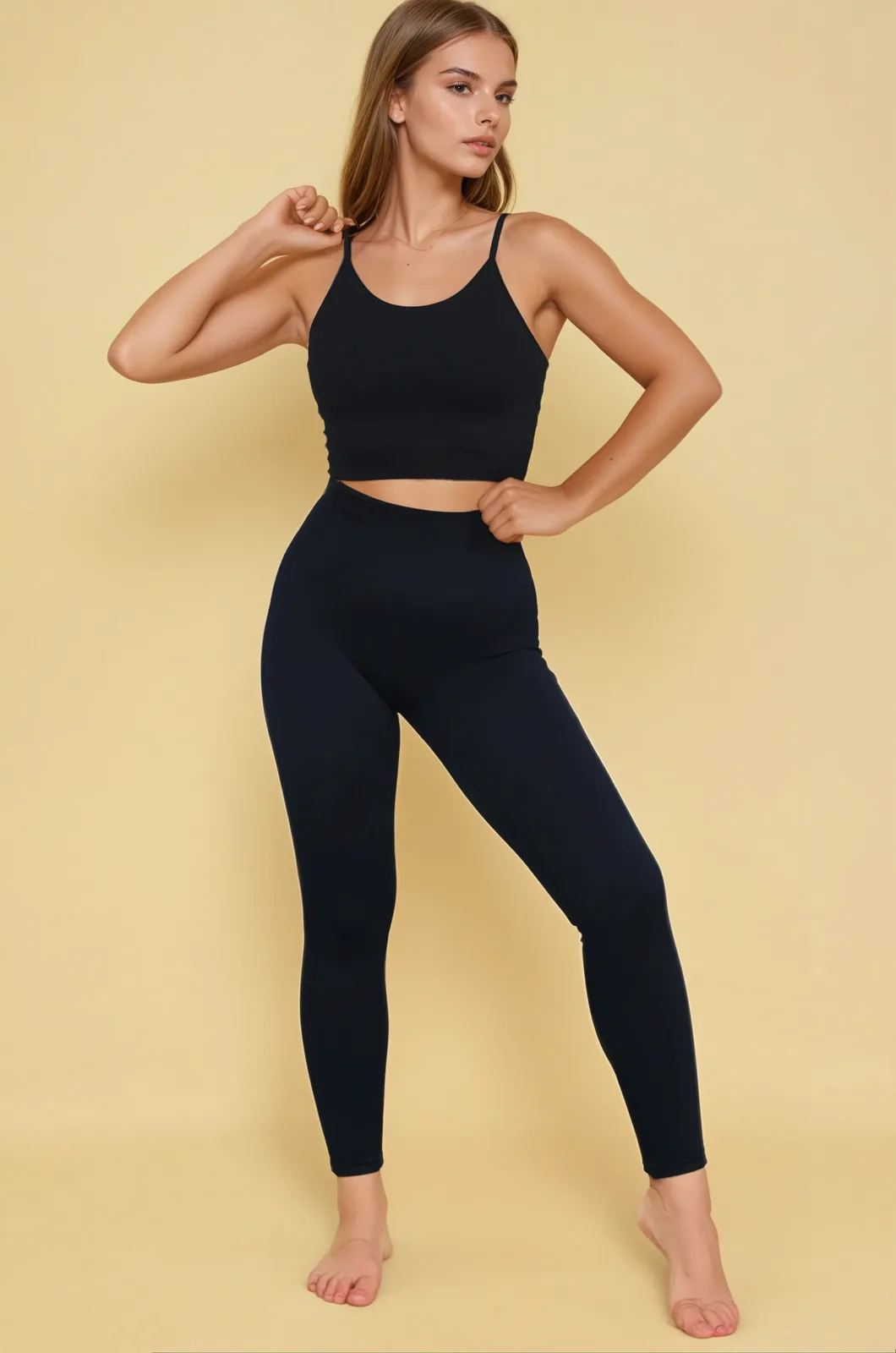
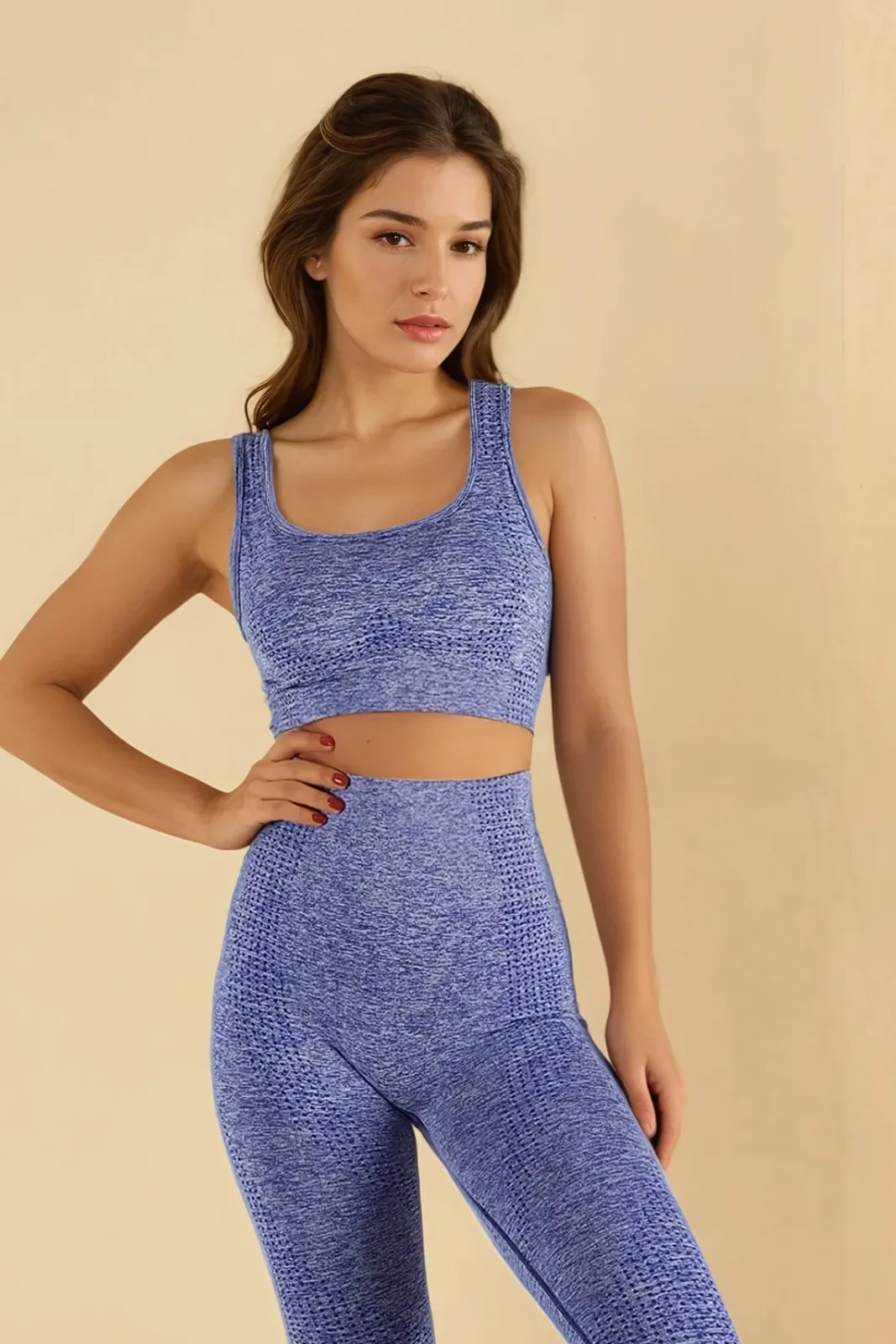
Fit against the body. With no side seams, there is nothing to chafe on a long run, nothing to roll at the thigh and nothing to print through under a fitted top. This is the reason most premium legging brands moved to seamless in the first place.
Engineered support. Compression at the waist, a firmer band under a bust, a softer stretch panel behind the knee, mesh where the body runs hot: in seamless these are knitted structures, not extra pieces sewn on. The garment gets its performance from how it is built rather than from what is added to it.
Consistency across a run. Fewer operations means fewer places for a garment to drift from the approved sample. A seam is a decision made by a person; a knit structure is a line in a program that repeats identically on unit one and unit five thousand.
Less waste. Knitting to shape means there is no marker to lay and no offcut to throw away, which matters more every year as brands are asked to account for it.
4. What cut and sew is genuinely better at
We are a seamless manufacturer, so treat this section as the honest version rather than the modest one. There are collections we will tell you to build the other way.
- Bold panel blocking. Large contrasting color panels with hard edges are what a cut and sew pattern is for.
- Hardware and pockets. Zips, drawcords, phone pockets, elastic loops and woven trims all need something to be stitched to.
- Mixed materials. Anything combining a woven shell with a knit lining, or any non-stretch component, is outside what a circular knitting machine can produce.
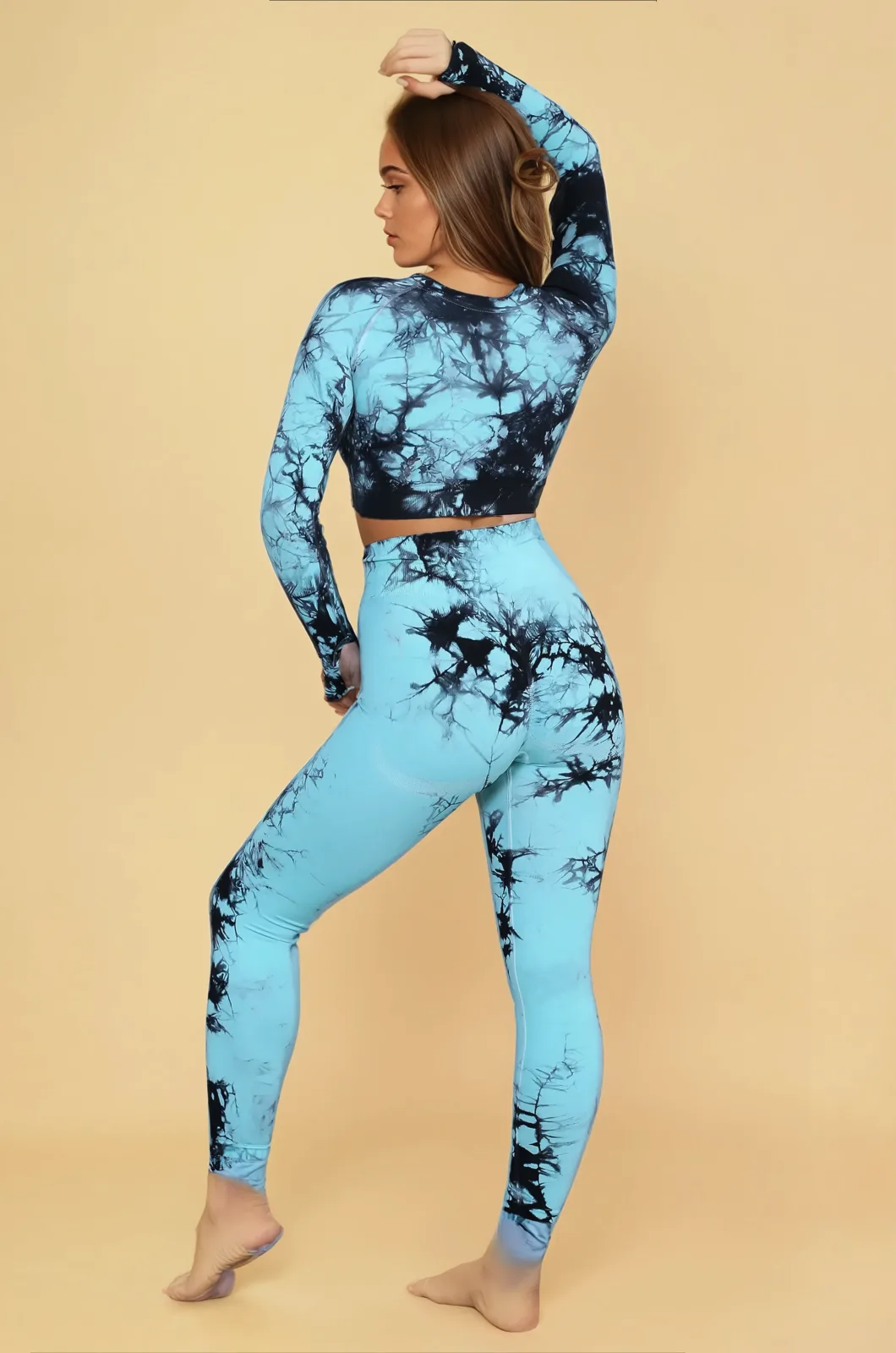
- Large placement prints. A flat panel takes a big graphic cleanly. On a knitted tube with varying structure, print behaves less predictably.
- Structured outerwear. Jackets, tailored shapes and anything that has to hold a form off the body belong to cut and sew.
Most mature brands end up running both. A seamless core range of leggings, bras and sets, and a cut and sew layer for shorts with pockets, jackets and graphic pieces. Those are two different suppliers, and that is normal.
5. Minimums and setup work differently
The number that matters is not just how many pieces, but what the minimum is counted against.
Our minimum is 1,000 pieces per style. Within those 1,000 you can choose up to 2 sizes and up to 3 colors. In seamless, the setup cost sits in the style rather than the unit: each style is programmed and sampled once, and once that exists the machine time per additional piece is small. Adding a fourth style is therefore a different kind of decision from adding another colorway to a style you already run.
In cut and sew, the setup cost sits in patterns, grading and markers, which have to be produced for every size in the range, and fabric usually has to be bought against roll or dye minimums before a single piece is cut. Different mechanism, same lesson: ask any factory to break its minimum down per style, per color and per size before you compare two quotes. If you are still mapping out the whole sequence, our guide to starting an activewear brand covers where this decision sits among the others.
Pick the construction your customer will notice first. If that is how the garment feels an hour into a workout, it is seamless. If it is what the piece looks like hanging on a rail, the extra seams are worth paying for.
6. Where the cost actually sits
No prices here, because a real number depends on yarn, structure, quantity and finishing. What is worth understanding is the shape of the cost.
Seamless front-loads it. Programming and sampling a style is real development work, and it happens before you have a single sellable unit. After that, most of the cost per garment is machine time and yarn, and it does not climb much with complexity, because a more sophisticated knit structure is mostly a more sophisticated program.
Cut and sew is the reverse. Getting started is lighter, but every seam is a labor operation, so a garment with twelve panels costs meaningfully more to assemble than one with four, at every unit, forever.
The practical consequence: cut and sew often looks cheaper on a first small run, and seamless tends to pull ahead as volume grows and as you re-order styles you have already developed.
7. How to decide
Four questions settle most collections.
- Is fit and feel the thing you are selling? If your brand promise is second-skin comfort and compression, go seamless.
- Does the design depend on panels, prints or hardware? If the drawing falls apart without them, go cut and sew.
- Will you re-order these styles? Development cost amortizes over repeat runs, which favors seamless for a core range and cut and sew for seasonal one-offs.
- Is any part of the garment non-stretch? Then part of the collection is cut and sew, whatever you do with the rest.
If you are unsure, send the design to a factory that owns the machines for one of the two methods and ask them which one your product actually needs. A supplier that outsources both will not give you a straight answer, because both answers cost them the same.
We produce seamless leggings, sports bras, shorts and complete sets from yarn to finished garment in our own facility in İstanbul, for brands across the USA and Europe. Have a look at what we make or read how we work as a seamless leggings manufacturer, then tell us about your project and we will come back with fabrics, minimums and a quote.